

Voice Control in 2026: Siri, Gemini, Alexa and Josh.ai — What Actually Works in an Australian Smart Home
Australian households have spent 2026 learning an uncomfortable lesson about voice control: the assistant is the part of the smart home you don't own. Google retired the Assistant that millions of local homes were built around — we covered what that switch-off means — Apple's rebuilt Siri is arriving in stages, and Amazon has been migrating Echo owners to Alexa+. If your lights answer to a voice, that voice changed this year, whether you asked it to or not.
So here's the honest state of play: what each assistant actually does well in an Australian home in 2026, where each falls down, and why the best voice control we install comes from a company most homeowners have never heard of.
The big three, honestly assessed
Google — Gemini for Home
The transition pain was real and some of it continues, but the destination is genuinely more capable: Gemini handles conversational, multi-step requests the old Assistant never could, and the recent updates — combined media-and-home commands in one sentence, a tidier automation editor — show steady progress. The catch is unchanged: your home's voice layer now evolves on Google's schedule, not yours, and features have historically appeared, changed and vanished with the roadmap.
Apple — Siri, mid-reboot
Apple's new Siri AI is the centrepiece of the home push that reportedly lands from next month, with the HomePad. For households deep in the Apple ecosystem, patience will likely be rewarded — Siri controlling a professional system through HomeKit integration already works today via Control4 Connect. But building a whole home's control strategy on a voice assistant that is mid-transformation is a bet, and we'd size it accordingly.
Amazon — Alexa+
Alexa remains the widest-compatibility, lowest-cost way to add voice to almost anything, and the Alexa+ generation is more conversational. It's also subscription-linked and privacy-questioned, and in premium homes we see it chosen less each year — not because it fails, but because households doing the job properly want the assistant integrated with everything, not shouting at a smart plug.
The one built for real homes: Josh.ai
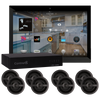
The most capable voice control in residential automation isn't made by a trillion-dollar company. Josh.ai is built exclusively for professionally installed homes, and it shows: it knows your rooms ("turn the lights down in here"), handles compound commands ("close the blinds and play jazz in the kitchen"), runs with strong privacy commitments, and integrates deeply with Control4 — the pairing we design with. At this year's CEDIA Expo it added natural-language scene programming and voice programming on its Edge remote; our AI industry piece covers that wave.
The honest caveats: Josh.ai is a premium product for systems that justify it, and it's an addition to a professional platform rather than a substitute for one. In a Control4 home that wants voice done properly, it's what we recommend. In a home with three smart plugs, it would be absurd, and we'll say so.
The design rule that outlasts every assistant
Voice is an interface, not a foundation. The homes that survived Google's switch-off without drama were the ones where the automation lived in a local platform — scenes, schedules and logic running on a controller in the house — with voice layered on top as one way in among several (keypads, touchscreens, the app, and the automation itself). When the assistant changed, they lost a habit, not a home. The homes that hurt were the ones where the assistant was the system.
That's the architecture we build every time: platform underneath, voices on top, swappable. It's also why the industry's local-AI turn — hubs doing their thinking in the house, a theme of this year's IFA — amounts to the consumer market converging on what professional systems always did.
Frequently asked questions: voice control
Which voice assistant is best for an Australian smart home in 2026?
For a professionally installed home: Josh.ai, integrated with the platform. For an Apple household without one: Siri via HomeKit, improving from October if the reports hold. For broad cheap coverage: Alexa. For Android households: Gemini, accepting the roadmap risk. The better question is which platform — the assistant should be replaceable.
Can Control4 work with Siri, Google and Alexa?
Yes — Control4 systems integrate with the major assistants (Siri, Control Centre and CarPlay via the Connect service and HomeKit), and with Josh.ai for the premium experience. One system, your choice of voices.
Is voice control reliable enough to depend on?
For convenience, yes. As the only interface, no — and it shouldn't be. Design so that every voice command has a keypad, touchscreen or automation equivalent. Guests, kids and 6am household members will thank you.
What about privacy?
A fair concern and the strongest argument for Josh.ai, which was built around it, or for keeping microphones out of certain rooms entirely — a design decision we make with clients room by room, not a default.