

Google Assistant Is Being Switched Off: What It Means for Your Smart Home
If your household says "Hey Google" to turn the lights off, things are about to change. Google has confirmed that Google Assistant — the voice assistant that has run its smart speakers, displays and Android phones for a decade — is being retired, with Gemini taking over on Android and Wear OS from 4 September 2026, and Gemini for Home rolling out to Google's speakers and smart displays. For most Australian households this will be the biggest change to how their smart home listens since they set it up. Here's what's actually happening, what to check before September, and why homes running a professionally installed system will barely notice.
What Is Actually Changing?
Google Assistant is being replaced by Gemini, Google's AI assistant, across the devices where Assistant currently lives:
- Android phones and Wear OS watches: from 4 September 2026, Gemini becomes the assistant. Long-press and "Hey Google" invoke Gemini, not Assistant.
- Google Home and Nest speakers and displays: Gemini for Home is rolling out in stages, replacing Assistant's voice engine on supported hardware. Google has also released a new Gemini-powered Google Home speaker.
- The Google Home app: continues as the control surface for Google-ecosystem devices, with Gemini behind the conversational features.
The upside is real: Gemini understands natural, conversational requests far better than Assistant ever did — "make it feel a bit cosier in here" rather than rigid command phrases. The downside is equally real: transitions like this are where routines break. Some Assistant features are not carrying over on day one, older Nest hardware sits on an uncertain support timeline, and automations built years ago may behave differently under the new engine.

What Australian Households Should Check Before September
- List your routines. If your morning routine turns on lights, reads the calendar and starts the kettle plug, write down what it does now — so you'll notice if part of it silently stops working after the switch.
- Check your hardware generation. Newer Nest speakers and displays are first in line for Gemini for Home. Older hardware (early Google Home speakers, first-generation Nest Hub) may receive a reduced experience or eventually lose features — Google's device support pages list what's included in the rollout.
- Audit what depends on Assistant. Smart plugs, budget cameras and Wi-Fi bulbs that were set up purely through "Works with Google Assistant" integrations are the most exposed. Most will migrate, but this is the moment to find out which ones matter to you.
- Expect a settling-in period. Every major assistant transition — Alexa's move to Alexa+, and Apple's upcoming Siri overhaul — has shipped with gaps at launch that closed over following months. Assume September and October are transitional.
Why Professionally Installed Homes Barely Notice
Here's the part that matters if you're planning a smart home rather than patching one together: in a professionally installed system, the voice assistant is an accessory, not the foundation.
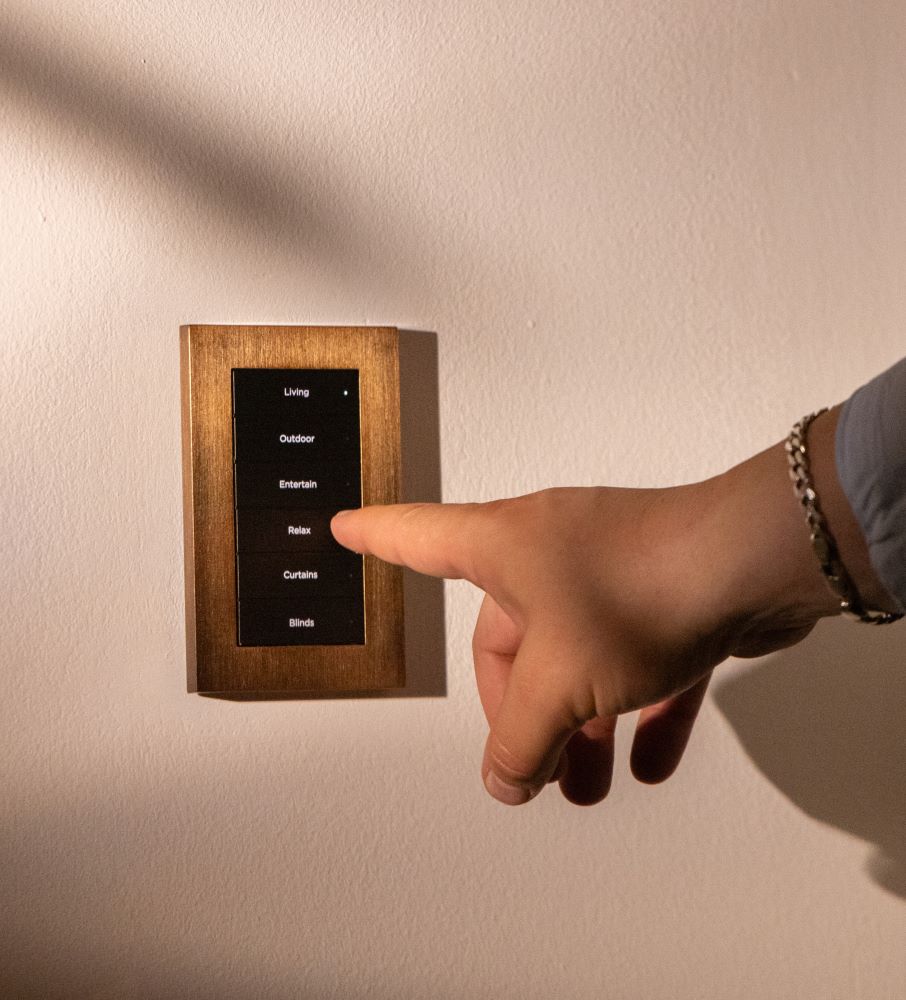
A Control4 system processes automation locally, on a processor inside your home. Lighting scenes, schedules, security, climate, audio — none of it depends on Google's, Amazon's or Apple's cloud services being available, or on which AI engine those companies ship this year. Voice control is layered on top as one of several interfaces alongside keypads, touchscreens, remotes and the app. When Google retires Assistant in favour of Gemini, a Control4 home keeps running identically; the voice layer is updated through a driver, and life goes on.
Compare that with a home where the assistant is the system — where every routine, schedule and device link lives inside Google's ecosystem. When the platform changes, the whole home changes with it. This is the third major assistant upheaval in two years, after Amazon's move to Alexa+ and ahead of Apple's expected Siri AI home hub — and each one has been a reminder that big-tech assistants evolve on big-tech timelines, not yours.
It's also worth saying: the AI wave is genuinely good news for smart homes. Josh.ai — the AI voice platform built specifically for professional automation, and Control4's exclusive AI voice partner — shows what voice control looks like when it's designed for the home rather than for a phone. Conversational, private, and integrated with the systems that actually run the house. The difference isn't AI versus no AI; it's whether the intelligence sits on a foundation you control.
What to Do If You're Invested in the Google Ecosystem
If your home runs on Google gear and it's working for you, there's no need to panic — most households will transition to Gemini with minor friction, and the new assistant is a genuine upgrade in understanding. Use the checklist above, expect a few weeks of quirks, and re-create anything that breaks.
But if this transition is the push that makes you want something more permanent — a system that doesn't reinvent itself every product cycle — that's exactly the conversation we have with clients every week. Many arrive after years of consumer smart home platforms, wanting the version that just works. Our comparison of professional and DIY smart home approaches is a good place to start, and our team can assess what's salvageable from your existing setup in a consultation.
Frequently Asked Questions: Google Assistant Switch-Off
Will my Google Home speakers stop working in September?
No. The 4 September date applies to Android phones and Wear OS watches, where Gemini replaces Assistant. Google Home and Nest speakers are moving to Gemini for Home on a staged rollout — your speaker will keep working, and the assistant behind it will change when the rollout reaches your device and region. Some older devices may receive a reduced feature set; check Google's support pages for your specific hardware.
Will my existing "Hey Google" routines survive the change?
Google has said routines are migrating to Gemini, but as with any platform transition, edge cases are expected — particularly complex routines and third-party device integrations set up years ago. Document your important routines before September so you can quickly identify and rebuild anything that changes.
Does Control4 work with Gemini?
Control4 has long supported voice control through the Google ecosystem, Amazon Alexa and Apple Siri, with integrations updated via drivers as the platforms evolve — that's the advantage of a dealer-maintained system. For clients who want voice as a primary interface, we increasingly recommend Josh.ai, the professional AI voice platform designed for automation, which integrates natively with Control4 and processes with privacy as a design principle.
Should I wait for the dust to settle before starting a smart home project?
The opposite, if anything. A professionally designed system is insulated from assistant churn precisely because it doesn't depend on any one ecosystem. Projects we design today are built on local processing with voice as an interchangeable layer — meaning Google's, Amazon's and Apple's AI upgrades become features you can adopt, not disruptions you have to absorb.