

Apple's Siri AI Home Hub: What Australian Homeowners Need to Know (2026)
Apple is finally making its big move into the smart home, and Australian homeowners are asking the same question: should I wait for Apple to solve my smart home automation? The company plans to launch a new Apple TV 4K, HomePod mini, and a dedicated smart home hub (nicknamed the "HomePad") sometime in late 2026, likely arriving in Australia alongside its US launch. All three devices are built around a rebuilt, AI-powered Siri.
As a Control4 Platinum Dealer based in Australia, we've watched every "this changes everything" consumer smart home launch since the original HomePod. This guide explains what Apple's coming hub will genuinely do well—and more importantly, what it won't do for a serious Australian smart home.
What Apple Has Reportedly Got Coming
Nothing below is officially announced yet — Apple hasn't confirmed any of it. But Bloomberg's Mark Gurman has the strongest track record in Apple reporting, and the details are specific:
- A new Apple TV 4K and HomePod mini, expected around late 2026, with upgraded processors designed to run the new Siri AI on-device.
- The "HomePad" smart hub — a roughly 7-inch square touchscreen running a tvOS-based operating system, expected to start around US$349. It's reported to handle FaceTime calls, music, photos, calendars and smart home control, with two designs: a tabletop version on a half-dome base, and a wall-mountable version that attaches magnetically.
- Facial recognition that adapts the interface — the screen reportedly recognises who is looking at it and adjusts what it shows, and at what size, based on the person and their distance from the device.
- A rebuilt, LLM-based Siri — by Gurman's account, Siri itself was the holdup for this entire product line. The jump from the old command-and-response assistant to a modern conversational AI is what finally unblocked it.
- More behind it — a smart security camera and a premium hub with a 9-inch screen on a motorised arm are reportedly in development.
Australian pricing and release timing haven't been reported. Based on Apple's usual pattern, expect local availability at or shortly after the US launch, with AUD pricing confirmed on the day.

What the Apple Hub Will Genuinely Do Well
Credit where it's due — there are real strengths here, and pretending otherwise would be foolish.
The interface layer
Apple is the best consumer interface company in the world. A wall-mounted touchscreen that recognises your face, surfaces the right controls, and responds to natural conversational requests is exactly the kind of thing Apple does brilliantly. For controlling the devices it can see, the day-to-day experience will almost certainly be polished.
A smarter Siri changes voice control
Old Siri needed exact phrasing: "turn on the living room lights". An LLM-based Siri should handle "it's a bit dark in here" or "set the place up for dinner" — the way modern AI assistants like Josh.ai already do in professional installations. Voice is finally becoming a usable interface for the whole household rather than a party trick, and Apple entering that race validates the direction the professional industry has been moving for two years.
Household approachability
A $349-class device from Apple lowers the barrier to entry dramatically. More Australians experimenting with smart lighting, climate schedules and voice control is good for everyone — including, frankly, us. Most of our clients don't come to professional automation cold; they come to us after outgrowing a DIY setup.

What It Won't Do — and Can't
Here's the part the launch-day coverage won't tell you. An Apple hub is a control surface. It's the glass you touch and the assistant you talk to. It is not the infrastructure that makes a home actually respond. That distinction matters more than any spec sheet.
It doesn't switch your lighting circuits
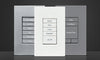
A hub can only control lights that are already controllable — smart bulbs, or circuits wired through proper lighting control hardware. In a renovation or new build, whole-home lighting control means dimmer modules, keypads and load management engineered per circuit, integrated with your electrical plan. No consumer hub replaces that layer; it sits on top of it.
It doesn't distribute audio and video
Multi-room audio through architectural speakers, video distributed from a central rack to every display in the house, a dedicated cinema with calibrated sound — this is hardware, cabling and signal management. AirPlay gets you casual music in a couple of rooms. It does not get you a home where every zone has consistent, high-quality audio that any family member can control without knowing whose phone the music is on.
It doesn't manage your network — it depends on it
Every consumer smart home product assumes a flawless home network and does nothing to provide one. The number one cause of "my smart home stopped working" is networking, not the devices. Professional installations start with enterprise-grade networking precisely because everything else — including any Apple gear you add — lives or dies by it.
It won't integrate the brands already in your home
Your ducted air conditioning, your security system and intercom, your CCTV, your blinds and curtains, your pool equipment, your garage doors — the equipment Australian builders and architects actually specify. Professional platforms exist because integrating all of this into one reliable system is hard. Control4 alone integrates more than 15,000 third-party products. Apple's ecosystem will support what's HomeKit- and Matter-certified, which is a fraction of that — and almost none of the trade-supplied equipment that ends up in a premium Australian build.
One more thing: the robotic arm isn't the point
The eye-catching stuff in the report — the motorised display, the facial recognition — is classic launch theatre. The boring truth is that a great smart home is judged at 6:45am on a school morning, when the heating came on before anyone woke, the blinds opened with the alarm, and nobody had to touch anything at all. That's automation. A screen you interact with is the opposite of the goal.
The Good News: This Isn't Either/Or
The framing of "Apple vs professional automation" misses how these systems actually get used together. Professionally installed homes are frequently full of Apple gear — and the platforms are built for it:
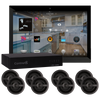
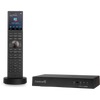
- Control4 integrates with Apple ecosystems — Apple TV control, AirPlay, and iPhone/iPad apps are all first-class citizens in a Control4 home.
- AI voice is already here at the professional level — Josh.ai, Control4's exclusive AI voice partner, has been doing privacy-focused, natural-language whole-home control for years, and its new AI X OS was officially released last month. When Apple's Siri hub arrives, it will be catching up to what well-designed installations already do.
- Matter keeps improving the bridge — the interoperability standard backed by Apple, Google, Amazon and Samsung means consumer devices and professional systems are getting steadily better at coexisting.
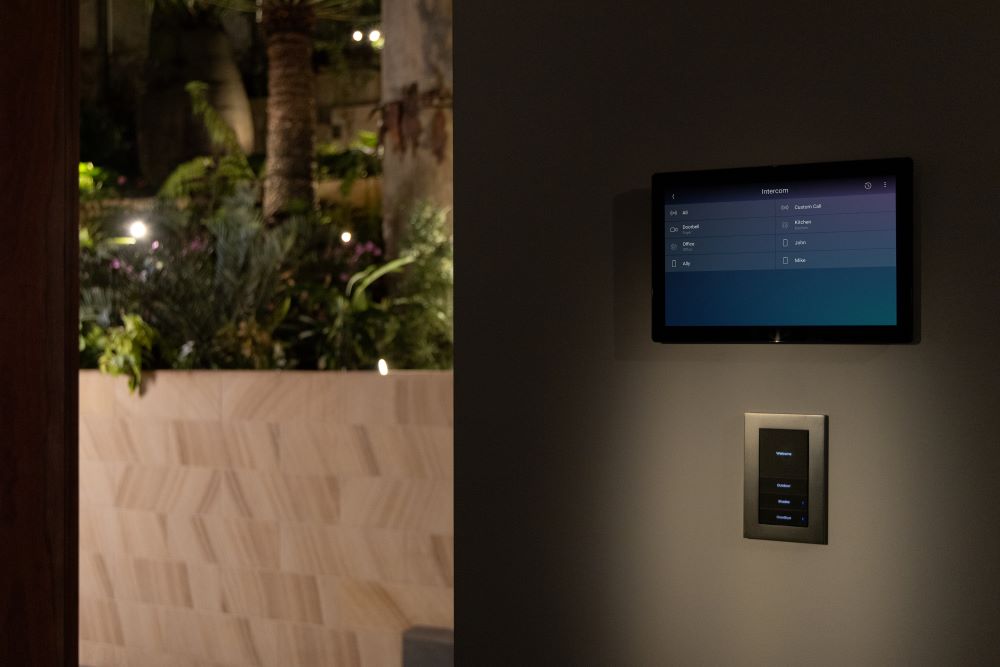
In practice, the likely role of Apple's hub in a serious Australian smart home is an additional, beautiful control point — alongside the engineered lighting, audio, climate, security and networking layer that makes the house work. The glass on the wall is the last 5% of a smart home. It's just the 5% you can see.
What to Do If You're Building or Renovating Now
Whatever Apple ships, one thing is certain: don't let the news delay your infrastructure decisions. The parts of a smart home that must be decided during construction — cabling, lighting circuits, speaker locations, network design, rack space — are exactly the parts no future Apple product will retrofit for you. Homes pre-wired properly can adopt every generation of new control hardware for decades. Homes that skipped it are stuck with whatever works over Wi-Fi.
If you're at the planning stage, the smart move is to get the infrastructure engineered now and keep your options open on control hardware — Apple's included.
Talk to Someone Who Installs This for a Living
We're a Control4 Platinum Dealer based in Australia, and we've watched every "this changes everything" consumer launch since the original HomePod. Some of them were great products. None of them changed what a properly automated home is built on. If you want an honest conversation about where consumer gear fits into your project — and where it doesn't — we're happy to have it.
Explore our full Control4 range online, or book a free consultation below.