

Smart Homes for Sydney Apartments: What Actually Works in Strata
Sydney is an apartment city — more than a third of us live in one — and yet almost everything written about smart homes assumes a freestanding house with a garage for the rack and a roof space for the cables. So it's worth pausing on something that happened at this year's CEDIA Smart Home Awards: Best Integrated Home Level I went to an apartment. Not a harbourside estate. An apartment, judged against the world's best work.
We design systems for apartments from Zetland to Mosman, and the truth is that apartments aren't a lesser version of the smart home — they're a different, and in some ways easier, one. Smaller footprint, one climate zone or two, shorter cable runs. The constraints are real, but they're specific and manageable. Here's the honest map.
What works brilliantly in an apartment — no strata conversation required
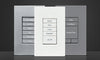
- Lighting. Smart modules behind your existing switches, engraved keypads, scenes for morning, evening and away. Entirely within your lot, no common property touched. In an open-plan apartment, lighting scenes do more per dollar than in any house — one space has to be kitchen, dining, lounge and cinema, and light is what changes its character. Our lighting guide applies wall-for-wall.
- Motorised blinds and sheers. Battery-powered motors mean no wiring and nothing visible from the street (the façade rule most strata schemes care about is the external appearance — an internal blind behind your existing glazing is normally yours to choose, though check your by-laws). Automated sheers on a north-facing wall of glass are the single best apartment upgrade we know.
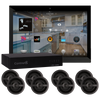
- Audio. A pair of quality streaming speakers per zone, or in-ceiling where there's a bulkhead — with Apple Music and AirPlay 2 running natively through the system. Small spaces reward good audio disproportionately.
- Climate. Most modern apartments run ducted or multi-head split systems that integrate cleanly. Pre-cooling before you get home matters more in a west-facing apartment than almost anywhere else in Sydney.
- One interface over the top. The real apartment problem isn't a lack of technology — it's six apps for six systems in sixty square metres. A single platform tying lighting, blinds, climate, audio and the TV into one interface (and one "Goodnight" button) is the difference between gadgets and a system.
Where strata enters the picture
Three areas genuinely involve the owners corporation, and the pattern in each is the same: what happens inside your lot is largely yours; what touches common property needs approval.
The front door. Your apartment door is usually a fire door, and fire doors have certification rules — you can't fit arbitrary hardware to them. Smart locks that replace compliant hardware with compliant hardware exist, but this is the one area where we always say: check the by-laws and get the approval in writing first.
The intercom. The building's video intercom is common property. You generally can't replace it — but you often don't need to: what most owners actually want is the ability to see and answer it from their phone, and there are integration paths for many systems. Building-dependent; we assess it case by case.
Anything through walls to outside. External cameras, balcony speakers visible from the street, a dish — approval territory. Inside your walls, run what you like.
The apartment-specific advice nobody gives
Your network still matters — differently. Apartments don't have the dead-zone problem of a two-storey house, but they have the opposite one: fifty competing Wi-Fi networks within range. A professional access point on clean channels beats the ISP router harder in a dense building than anywhere else. The network guide explains.
Design for resale. Sydney apartments trade often. A clean, professionally documented system — keypads engraved, everything on one platform, handover pack ready — is a selling feature; a drawer of random hubs is a liability. (If you're on the other side of that trade, our guide to buying a home with an existing system covers what to check.)
Renters and future-movers: go portable-first. Battery blinds, streaming speakers and plug-in lamps move with you. We'll tell you honestly which parts of a system are worth doing in a place you might leave in three years — and which aren't.
Frequently asked questions: apartment automation
Do I need strata approval for a smart home?
For most of it — lighting, internal blinds, audio, climate control — no, because it's within your lot. Door hardware, the building intercom and anything on common property or visible externally: yes, and get it in writing. By-laws vary by scheme, so we check yours as part of the design.
Is it worth automating a small apartment?
Per square metre, more than a house. One well-designed open-plan space with lighting scenes, automated sheers and great audio changes how the whole home feels. The CEDIA judges agreed.
What does an apartment system cost?
Less than a house — fewer rooms, shorter runs, one climate zone. The entry tiers in our packages guide map well to a two-bedroom apartment; where the money goes changes (more into shading and audio, less into distribution).
Can I take it with me when I sell?
Battery blinds and streaming audio, yes. Lighting modules and keypads are better left — and marketed. Ask us to design with that split in mind if a move is plausible.