

Smart Home Energy Management: How Automation Cuts Your Power Bill
Australia just passed half a million subsidised home batteries, rooftop solar sits on more than one in three homes, and several NSW retailers now offer free power in the early afternoon. The economics of household electricity have inverted: energy is nearly free when the sun is up and expensive when it isn't. The households winning under the new rules aren't the ones with the biggest battery — they're the ones whose homes automatically move consumption to the cheap hours. That's smart home energy management, and in 2026 it has become one of the most financially compelling reasons to automate. Here's how it works.

The New Shape of an Australian Power Bill
Three shifts have rewritten the household energy equation:
- The battery boom: the federal Cheaper Home Batteries rebate has driven more than 500,000 installations in a little over a year — we covered the milestone and what it means in our home battery guide
- Time-varying prices: time-of-use tariffs, wholesale-linked plans and free midday power windows mean the same kilowatt-hour can cost nothing at 1pm and premium rates at 7pm
- Bigger loads: EV chargers, electric hot water, pool pumps and ducted air conditioning are each capable of moving hundreds of dollars a year depending on when they run
Put simply: when you use energy now matters as much as how much you use. Managing that manually — checking the solar app, remembering to delay the dishwasher, starting the pool pump at lunch — lasts about two weeks before everyone stops bothering. Automation doesn't stop bothering.
What Smart Energy Management Actually Does
A Control4-based energy layer coordinates the loads around your solar, battery and tariff. In practice:
- Load-shifting to solar hours: pool pump, hot water boost, dishwasher-ready alerts and EV charging scheduled into the solar peak or free-power window automatically
- Tariff-aware climate: pre-cool the home at 2pm on cheap energy so the air conditioning coasts through the expensive evening peak instead of working hardest at peak rates
- Battery-aware scenes: on grid-outage or low-battery states, the home sheds discretionary loads automatically — the theatre and pool wait, the fridge and network don't
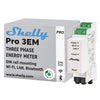
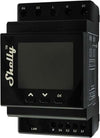
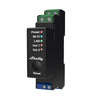
- Circuit-level visibility: energy monitoring shows exactly where power goes, room by room and circuit by circuit — which is how you find the ancient garage fridge costing $400 a year
- Everything in one place: solar production, battery state, consumption and control in the same app that runs the lights and security — not five separate manufacturer apps
The Compounding Wins Nobody Advertises
Beyond the headline load-shifting, an automated home saves energy in quiet, cumulative ways: occupancy-based lighting that never leaves rooms lit; a Goodbye scene that sets climate to away and kills standby loads on AV circuits; blinds that close against the western sun in summer before the house heats up (motorised shading is as much an energy feature as a comfort one); and dimmed LED lighting that draws 30–40% less than full brightness. For a typical family home, we see automation trim 10–20% off consumption before any tariff optimisation — the load-shifting then works on the price of what remains.

What It Costs and What It Returns
| Scope | What's Included | Approx. Cost AUD (installed) |
|---|---|---|
| Monitoring + scheduling | Circuit-level energy monitoring, smart scheduling of major loads | $3,000 – $8,000 |
| Integrated energy layer | Above + solar/battery integration, tariff-aware climate and EV charging, load scenes | $8,000 – $20,000 |
| Whole-home energy automation | Full Control4 integration across lighting, shading, climate, pool, EV and battery | Part of broader system — see packages |
Returns depend on your tariff, solar size and load profile, but for battery-owning households with an EV or pool, load-shifting routinely moves $500–$1,500 a year — on top of the 10–20% consumption trim. The energy layer is most cost-effective as part of a broader automation project sharing the same processor and network; see our cost guide for how it fits a whole-home budget.
Retrofit or New Build?
Both work. Energy monitoring, smart relays on major loads, solar-aware EV charging and scheduling can all be added to an existing home — typically over one to two days — and it's one of the most common retrofit requests we take. New builds should provision it from the start: metering-capable switchboards, controlled circuits for pool and hot water, and EV conduit cost little during construction, as covered in our new build guide.
Frequently Asked Questions: Smart Home Energy Management
Does this work with my existing solar and battery?
In most cases, yes. Control4 integrates with the major inverter and battery brands sold in Australia — Tesla Powerwall, Sungrow, Alpha ESS, Fronius and others — at the monitoring level, and coordinates the household loads around them regardless of battery brand. We confirm compatibility for your specific hardware during consultation.
I don't have a battery yet. Is energy automation still worth it?
Yes — arguably more so. Solar-only households export cheap power all afternoon and buy expensive power all evening; load-shifting consumption into the solar window attacks that gap directly. And if you add a battery later under the rebate, the automation layer makes it work harder from day one.
Can the system respond to my electricity plan's pricing?
Time-of-use schedules are programmed directly. For dynamic and wholesale-linked plans, scheduling is built around the plan's known price windows — including the free midday periods some NSW, Queensland and South Australian retailers now offer. We set this up during programming and adjust it if you switch plans.
Will automation interfere with my battery's own management?
No — the battery's inverter continues to manage charging and discharging. The automation layer works on the other side of the meter: shaping when the household's loads run so the battery's stored energy goes further. The two are complementary, not competing.
What's the single best first step?
Circuit-level monitoring. Two weeks of real data almost always reshapes the plan — the loads people assume are the problem rarely are. From there, we scope the automation to attack your actual consumption pattern rather than a generic one.
Book Your Free Consultation →