

How Much Does a Smart Home Cost in Australia? (2026 Pricing Guide)
Most smart home websites dodge this question. They'll say "it depends on your home size and requirements" — which is technically true but completely useless if you're trying to understand what you'd actually be spending before picking up the phone.
We're going to do it differently. This guide gives you real Australian pricing across every tier of smart home automation, explains what drives the cost, and tells you what's worth spending money on and what's not. We install these systems for a living, so everything here is based on actual projects — not marketing estimates.

The Short Answer: What Does a Smart Home Cost in Australia?
Here's the honest overview before we get into detail:
| Tier | Investment (Supply + Install) | What It Covers |
|---|---|---|
| Entry | $5,000 – $15,000 | 1–2 systems (lighting or audio). Smaller homes, apartments, or first-stage installs. |
| Mid-Range | $30,000 – $65,000 | Lighting, multi-room audio, climate, security cameras. 3–5 bedroom home. |
| Premium | $65,000 – $125,000+ | Full whole-home automation: lighting, audio, home theatre, climate, CCTV, access control, networking, blinds, intercom. |
| Luxury / New Build | $125,000 – $300,000+ | Architecturally specified whole-home automation, DALI lighting, custom home theatre, pool/lift/HVAC integration, full enterprise networking. |
These are supply-and-install figures including equipment, programming, and commissioning. They exclude GST.
What Actually Drives the Cost?
Smart home costs aren't driven by one thing — they're the product of five variables that interact with each other. Understanding these helps you know where to invest and where you can scale back without compromising the experience.
1. The Number of Systems You're Automating
Each "system" — lighting, audio, climate, security — has its own hardware, its own integration work, and its own programming time. Adding a Daikin HVAC integration to an existing Control4 system that already has lighting and audio is an incremental cost, not a starting-from-scratch cost, but it still adds to the total. The more you integrate, the more powerful the result — but the cost scales with scope.
2. The Size and Complexity of Your Home
Lighting in a 3-bedroom apartment costs less than lighting in a 6-bedroom house with multiple living zones, an outdoor area, and a pool cabana — because there are simply more lighting circuits, more keypads, and more scenes to program. Similarly, multi-room audio across 8 zones costs roughly twice what 4 zones costs in hardware, though installation economies mean it doesn't scale perfectly linearly.
3. The Quality of Equipment You Specify
Control4 is itself a premium brand, but within a Control4 project there's significant variation in the quality of sub-components. Entry-level in-ceiling speakers from a solid mid-range brand cost a fraction of architectural speakers from a premium marque — both can be integrated into Control4, but they sound and look very different. Similarly, there's a wide range between basic IP cameras and high-end Axis security cameras, between a standard projector screen and a motorised masking screen for a proper home cinema.
4. New Build vs Retrofit
This is the biggest single cost variable most people don't account for. Installing a smart home during construction — when walls are open, conduits can be run, and cabling can be hidden — is dramatically cheaper than retrofitting an existing home. A retrofit often requires wall cavities to be opened, cabling to be fished through finished walls, and cosmetic repairs to make good afterwards. If you're planning a renovation, do your smart home planning first — it pays off significantly.

5. Your Dealer's Programming and Project Management
A Control4 system is only as good as the programming behind it. Poor programming makes an expensive system feel clunky and unreliable. Good programming makes it feel effortless. The difference in outcome between an experienced Platinum dealer who has programmed hundreds of homes and a less-experienced operator is substantial — and it's one of the reasons dealer tier matters when comparing quotes.
Entry Tier: $5,000 – $15,000
At this level, you're typically choosing one or two systems to automate — most commonly smart lighting or multi-room audio as a first stage. A Control4 entry package might include:
- Control4 EA-1 controller (the entry-level brain)
- Smart lighting for 4–8 circuits in primary living areas
- 2–4 audio zones with in-ceiling speakers
- Control4 app access on your existing iOS or Android devices
- Basic scene programming (movie, dinner, away, goodnight)
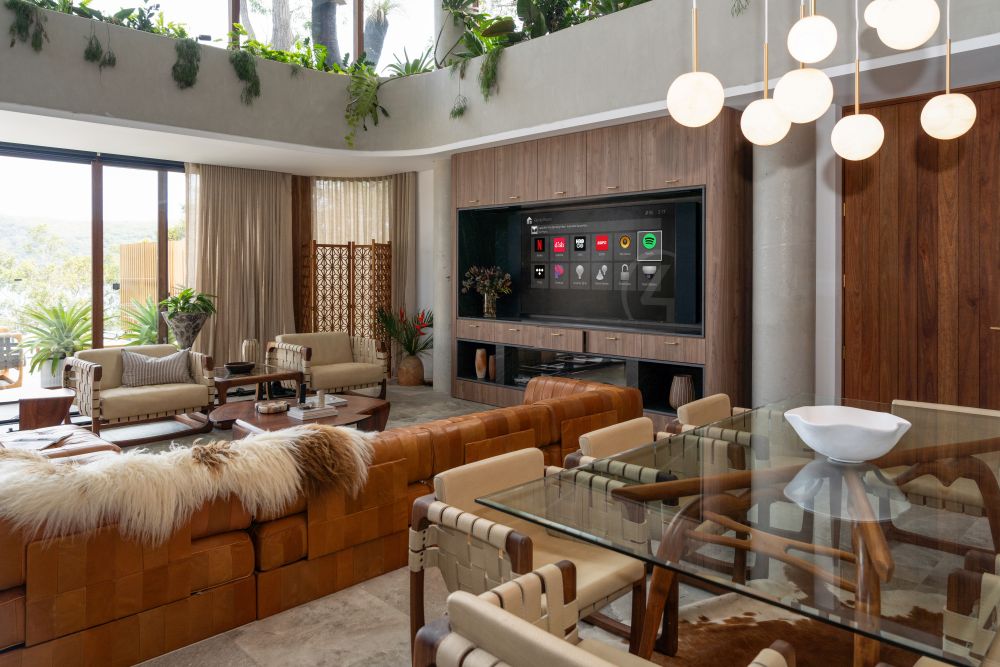
The critical advantage of starting here: the system you install today becomes the foundation for everything you add later. A Control4 EA-1 installed now can be upgraded to an EA-5 as your needs grow. Every device, driver, and scene transfers. You're not starting over — you're building on what you have.
Mid-Range Tier: $30,000 – $65,000
This is where whole-home automation starts to feel genuinely transformative. At this investment level for a typical Sydney family home, you'd expect to see:
- Control4 EA-3 or EA-5 controller
- Whole-home lighting control across all living areas, bedrooms, and outdoor spaces
- Multi-room audio: 6–10 zones including outdoor areas
- Home theatre integration (existing AV equipment brought under Control4 control)
- Daikin or Mitsubishi climate control — whole home scheduling and zone control
- CCTV: 4–8 cameras with local recording, viewable from Control4 app
- Automated motorised blinds — primary living areas
- Enterprise Wi-Fi networking (Ubiquiti UniFi)
- Keypads at all major switch points
- Full scene programming and remote access

Premium Tier: $65,000 – $125,000+
Premium installations are common in Sydney's upper North Shore, Eastern Suburbs, and Inner West — particularly in new builds and substantial renovations. At this level, virtually everything is integrated and the difference in day-to-day experience is significant. Typical inclusions:
- Control4 EA-5 controller with redundancy
- DALI lighting control throughout — architectural-grade dimming with scene flexibility
- Multi-room audio: 10–16 zones, including outdoor entertaining areas and wet areas
- Dedicated home cinema room with proper acoustic treatment, 4K projection, Dolby Atmos audio, and motorised masking screen
- Full home climate with multi-zone Daikin VRV or similar
- Professional CCTV: 8–16 Hikvision cameras with NVR, AI detection, integration into Control4 interface
- Motorised blinds and curtains throughout
- Video intercom and access control at gates and entry points
- Enterprise Ubiquiti networking — full property coverage, PoE infrastructure
- Pool and outdoor area integration
- Touchscreens throughout the home
- Full scene library and custom programming
Luxury New Build: $125,000 – $300,000+
Projects at this level are typically architecturally designed new builds where the smart home specification is part of the building design from day one. The electrician, builder, and automation specialist work together during construction. At this investment level, you're typically integrating systems beyond the standard list — residential lifts, pool automation, solar and battery energy management, wine cellar monitoring, or whole-property intercom systems across a large site.
What's NOT Included in These Estimates
A few things that often catch people off guard:
- Electrician work: Control4 lighting requires low-voltage cabling that your electrician runs during construction or renovation. This is usually a separate cost to the automation quote, coordinated between your dealer and your electrical contractor.
- Speaker installation: In-ceiling speakers require holes to be cut and baffle cavities. If this is retrofit work, there may be plastering and painting work needed afterwards.
- Rack and comms cabinet: A structured home network and Control4 system requires a properly ventilated equipment cabinet. This varies from a small wall-mounted rack to a full 42U server rack in luxury properties.
- Annual service and support: Most quality dealers offer annual service agreements. This is worth having — it covers firmware updates, programming changes, and on-call support when something doesn't behave as expected.
Is a Smart Home a Good Investment?
In the Sydney property market, the evidence suggests yes — particularly for premium properties. Real estate agents working with $2M+ homes consistently report that a well-installed Control4 system is a positive in sale negotiations, not a liability. Buyers in that bracket expect it. An under-automated home in a premium suburb is increasingly notable by its absence.
Beyond resale, the more compelling argument is liveability. The Australian homeowners who invest in serious automation universally report that it changes how they live at home — not in a novelty way, but in a daily quality-of-life way. Waking up without an alarm to light that gradually brightens. Leaving for work by pressing one button that locks up, arms everything, and adjusts the thermostat. Arriving home to a pre-lit, pre-cooled house. These are not small things once you experience them.
How to Get an Accurate Quote
The only way to get a number you can actually use is a proper scope conversation with a certified dealer. In that meeting, your dealer will want to know:
- The size, layout, and type of your home (new build, renovation, or existing)
- Which systems you want to automate (everything, or just specific areas)
- Whether cabling is already in place or needs to be installed
- Your timeline and whether it connects to a building or renovation project
- Your rough budget range (so they can recommend the right scope)
A reputable dealer will give you an itemised proposal — not a single number. You should be able to see what you're paying for equipment, what's programming, and what's installation.
Frequently Asked Questions
Can I start small and add more later?
Yes — this is one of the most compelling features of Control4. Install lighting control today. Add audio next year. Add a home theatre integration the year after. Each stage adds to the existing system rather than replacing it.
What's the cheapest way to get into Control4?
Start with a single-system install — lighting only or audio only — with the right controller for future growth. Trying to go cheaper than this usually means choosing an inferior platform and regretting it when you want to expand.
Should I do smart home during a renovation or after?
During. Always during. The cost difference between installing during construction (when walls are open and cabling is easy) versus retrofitting afterwards is significant. Even if you're not ready to activate every feature immediately, running the cabling infrastructure during construction costs a fraction of what it costs to add later.
Are there ongoing costs?
The Control4 platform doesn't charge subscription fees. Your main ongoing cost is dealer support for changes and updates, and any hardware you add over time. An annual service agreement with your dealer (typically $500–$2,000/year depending on system size) is strongly recommended.
Explore our smart home packages online, or book a free consultation with our team to discuss what's right for your home and budget.