

Half a Million Australian Homes Now Have a Battery. Here's How a Smart Home Makes It Work Twice as Hard
Australia has quietly become the home battery capital of the world. As of late July 2026, roughly 487,000 households have installed a battery under the federal Cheaper Home Batteries rebate — around 2,000 new systems every day — putting the country halfway to its one-million-by-2030 target in a little over a year. Federal figures put the installed capacity at about 13 gigawatt-hours: more than Australia's entire grid-scale storage fleet, and more than the whole of the United States' residential battery market.
Here's the part almost nobody is talking about: the overwhelming majority of those batteries are being run on factory defaults. They charge when the sun shines, discharge in the evening, and that's it. The battery is smart. The home around it usually isn't.
We design and install automation systems for Sydney homes for a living, and energy is now one of the first topics raised in almost every consultation. This post explains what a professionally automated home actually does with a battery — and why the difference is worth thousands of dollars over the life of the system.
A Battery Without Automation Is Only Half a System
A home battery makes one decision well: store solar now, use it later. What it can't do is change when and how your home consumes energy — and that's where most of the remaining value sits. Consider what it can't see:
- The pool pump running through the evening peak instead of the middle of the day
- The EV charger pulling grid power at 7pm because that's when you plugged in
- The air conditioning starting cold at 5:30pm — the most expensive hour of the day — instead of pre-cooling the house on free solar at 2pm
- The hot water system heating on its own schedule, blind to what the solar is doing
- Standby loads quietly draining the battery overnight
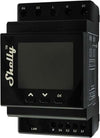
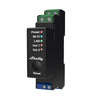
Each of these is a controllable load. An automation platform like Control4, integrated with energy monitoring, is the layer that coordinates them — shifting consumption into the hours when your panels are generating and your tariff is cheapest, so the battery's stored energy is reserved for the loads that genuinely can't move.
The Contrarian Maths: A Smarter Home Can Mean a Smaller Battery
Analysis of South Australia's grid programs earlier this year made a point we've been making to clients for some time: intelligent load management can reduce the battery capacity a household actually needs by a meaningful margin — industry analysis suggests in the order of 20–30%. Shift two to four kilowatt-hours of daily consumption into the solar window, and a 10 kWh battery starts performing like a much larger one.
In practical terms: before you pay for the biggest battery on the quote, it's worth asking whether a mid-sized battery plus a properly automated home gets you further — because in many Sydney households, it does.
What Smart Energy Management Looks Like in Practice
In the homes we build and retrofit, energy automation typically includes:
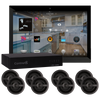
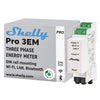
- Live energy visibility: circuit-level monitoring displayed on Control4 touchscreens and the app — generation, consumption, battery state of charge, and which circuits are drawing what, in real time.
- Solar-aware load scheduling: pool pumps, hot water, towel rails, and irrigation run when generation is high, automatically adjusting with the seasons.
- Solar-aware EV charging: the charger throttles to match spare solar output, so the car charges predominantly on your own power rather than the grid's.
- Pre-conditioning: the home cools (or heats) itself during the generation window, then coasts through the peak — with the battery covering the balance instead of doing all the heavy lifting.
- Away and holiday modes: one scene drops the whole home to minimal consumption while keeping the essentials — security, refrigeration, condensation control — running.
- Tariff awareness: schedules built around your actual time-of-use tariff, including free or ultra-cheap midday windows offered by a growing number of retailers.
What About Virtual Power Plants?
VPP participation — letting your retailer draw on your battery during grid events in exchange for credits — is becoming a standard offer alongside new installations. It can be worthwhile, but it changes the economics of how much stored energy you want in reserve. A home that has already shifted its flexible loads onto solar is in a far better position to commit capacity to a VPP without feeling it in the evening. This is a conversation worth having before you sign up, not after.
Where to Start
If you already have a battery, the starting point is visibility: an energy monitoring layer and an honest look at when your major loads actually run. If you're planning a battery — or a renovation or new build — the sequencing matters even more, because circuits for controllable loads, EV charging provision, and monitoring hardware are far cheaper to include during electrical work than to retrofit afterwards. Our guides to smart home costs in Australia and Control4 for Australian homes cover how the automation layer is scoped and priced.
Frequently Asked Questions: Home Batteries and Smart Homes
Can Control4 integrate with my home battery?
Control4 integrates with major residential battery and inverter brands sold in Australia (Tesla Powerwall, Sungrow, Alpha ESS and others) at the monitoring and dashboard level, and coordinates the loads around the battery — scheduling, scenes, EV charging and circuit-level control — regardless of battery brand. The right integration approach depends on your specific inverter and battery combination; we confirm this during consultation.
I already have solar and a battery. Is it too late to add the automation layer?
No — this is one of the most common retrofit requests we receive. Energy monitoring, smart relays on major loads, solar-aware EV charging and scene-based scheduling can all be added to an existing solar-plus-battery installation, typically over one to two days of installation work depending on switchboard access and scope.
Does the Cheaper Home Batteries rebate cover any of the automation?
The federal rebate applies to the battery system itself, not the automation layer around it. State-level programs change frequently, so verify current eligibility rules with your installer or the relevant government sites before budgeting. We recommend treating automation as part of the total energy project budget from the start — it's a modest fraction of the battery's cost and materially changes what the battery returns.
What's a sensible budget for smart energy management?
A monitoring-plus-scheduling package for an existing home is an accessible entry point; a fully integrated energy layer in a larger automated home scales with the number of controlled circuits. Because every switchboard and load profile differs, we quote from an in-home assessment rather than a price list. The consultation is free and carries no obligation.