

Inside the World's Best Smart Homes: The 2026 CEDIA Awards
Today, at a ballroom in Denver, the smart home industry crowns its best. The CEDIA Smart Home Awards — announced this afternoon Australian time at CEDIA Expo, the world's biggest home technology show — recognise the finest automated homes built anywhere in the Americas in the past year. Think of it as the Oscars of home technology: the projects that win today will set the visual and technical benchmark that filters into homes everywhere over the next few years, including here in Australia.
We previewed what CEDIA Expo 2026 means for Australian homes a few weeks ago. This post is about the awards themselves: who's in the running, what the judges actually reward, and — the useful part — what the world's best smart homes have in common that any home can borrow.
How a Smart Home Wins an Award
CEDIA's judges score four things: technical execution (does the engineering behind the walls hold up to scrutiny), design integration (does the technology serve the architecture rather than fight it), innovation, and overall impact — what it's actually like to live in the finished home. Twelve projects made the 2026 finalist list, built by integration firms including AKTIVA, Audio Images, Casaplex, Elliston Systems & Design, HAAS Home Technologies, Nerve Inc. and Petrone Technology Group — alongside business and product awards contested by names Australian smart home owners know well: Control4, Lutron, Savant and Samsung among them.
Notice what's not on the judging list: gadget count. Nobody wins for having the most devices.

What the World's Best Smart Homes Have in Common
1. The technology is invisible
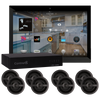
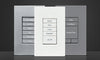
The consistent signature of an award-level home is how little technology you can see. Architectural speakers disappear into ceilings, screens conceal behind joinery or artwork, equipment lives in a plant room, and wall acne — the clutter of mismatched switches, panels and thermostats — is replaced by a few engraved keypads. The home reads as architecture first; the intelligence reveals itself only when you use it.
2. Light is treated as a building material
Winning projects use lighting scenes and motorised shading the way architects use glass and stone — to shape how spaces feel across the day. Circadian dimming, shade positions that track the sun, and evening scenes designed like stage lighting. This is the single most transferable idea on the list, and it's the thinking behind our lighting control guide and the shading trend piece we published earlier this year.
3. One interface runs everything
Lighting, climate, audio, cinema, security, pool, blinds — one system, one app, one keypad language everywhere in the house. Never eleven apps. The world's best homes are defined less by what's installed than by how coherently it behaves.
4. There's always a signature entertainment space
Nearly every finalist features a showpiece — usually a dedicated cinema or an outdoor entertaining zone that dissolves the indoor-outdoor boundary. The engineering behind those rooms is exactly what we cover in our home theatre automation guide.
5. The boring infrastructure is flawless
Enterprise-grade networks, structured cabling, ventilated racks, surge protection, backup power for the essentials. Award judges look behind the walls — because a beautiful home that drops off Wi-Fi is not a great smart home, it's an expensive frustration.
What Your Home Can Borrow — at Any Budget
You don't need a finalist's budget to apply finalist thinking. Design scenes around moments ("dinner", "movie", "goodnight") rather than devices. Put the money into lighting and shading before gadgets. Insist on one interface for everything. Get the network right before anything else. And hide the technology — a clean wall with one keypad beats a wall of plastic every time. Our 78 home automation ideas post is full of these concepts scaled to real Australian homes and budgets.
The winners are announced today, Australian time. We'll break down the winning projects — and the ideas worth stealing from each — in a follow-up next week.
Frequently Asked Questions
What is CEDIA?
CEDIA is the global industry association for home technology professionals — the body that certifies integrators, sets technical standards, and runs CEDIA Expo, the industry's biggest annual show. Its Smart Home Awards recognise the best residential projects worldwide, judged by industry experts across regions including the Americas, EMEA and Asia Pacific.
Do award-level features need an award-level budget?
The showpiece homes run to seven figures, but the principles — scene-based design, lighting and shading first, one interface, invisible hardware, a proper network — apply from around $20,000–$30,000 upward. Our smart home packages guide shows how they scale.
Can an existing home reach this standard, or only new builds?
Most finalist projects are renovations or retrofits of existing homes. Wireless lighting and shading, retrofit-friendly audio and modern controllers mean an existing Sydney home can adopt nearly everything above without rebuilding — the design process just starts from what's already in the walls.