

The Best Smart Home in America Is the One You Can't See
Something worth noticing happened on 18 September: the mainstream lifestyle press picked up the story of Casa de Verano, the Texas summer house that swept three national smart home awards. The headline wasn't about the size of the screens. It was that the home blends its technology "so seamlessly into its design that guests never notice it."
When the consumer press — not the trade press — decides that's the story, the definition of a great smart home has officially changed.
What Casa de Verano actually proves
We covered the full winners list when CEDIA announced the Americas awards. Casa de Verano took Best Integrated Home Level III, the Technology Meets Design category, and an honourable mention for its cinema. The integrator, HAAS Home Technologies, described the goal as systems that "elevate comfort, mood and experience without ever demanding attention."
Read that sentence again, because it's the whole philosophy: the technology's job is to disappear into the outcome. Lighting, climate, audio, security and a dedicated cinema, everywhere and visible nowhere. The judges gave it the design award and the integration award — proof the two are no longer in tension.
And before you file this under "nice for Texas billionaires": the same awards gave Best Integrated Home Level I to an apartment in Peru. Invisible, well-designed automation is a set of decisions, not a square-metre count.
How technology disappears, in practice
Invisible isn't a product you buy; it's a series of choices made early. These are the ones that do the work:
- Keypads instead of switch banks. One engraved keypad replacing six plastic switches is the single most visible upgrade a lighting system makes — by removing things, not adding them. Our lighting control guide covers how scenes replace switches.
- Architectural lighting, not visible fittings. Light the wall, the joinery, the artwork — not the ceiling with a grid of downlights. This is where DALI control earns its keep.
- Shading that moves so the hardware doesn't show. Recessed pelmets, concealed motors, fabric chosen with the architect. The 2026 shading trend is exactly this.
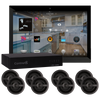
- Audio you hear and never see — in-ceiling speakers colour-matched or plastered in, with the amplification in a rack in the garage.
- One rack, somewhere else. Every box, every cable, every blinking light lives in a plant room or cupboard. The living spaces get the result; the equipment gets exiled.
None of that is a retrofit whim — it's why the conversation belongs at design stage, with the architect and builder in the room. Our new build guide makes the case for raising it before the walls close.
The part the lifestyle articles skip
Invisible technology is harder, not easier. Anyone can mount a tablet on a wall. Concealing a shading motor in a pelmet the architect will accept, or getting whole-home audio to vanish into a plastered ceiling without cooking the amplifiers, is engineering — and it's the difference between a house that photographs well and one that works for fifteen years. That's the honest reason award juries reward it: it's the hardest trick in the industry done so well it looks like nothing happened.
If you'd like your home to be the kind guests can't figure out, book a consultation. The best compliment our work ever gets is that nobody noticed it.